Overview

What Is Cloud Printing?

A practical explanation of how cloud printing works, what it replaces, and why it's becoming the default for organizations that want to simplify print infrastructure.

Cloud Printing Definition

Cloud printing is a model where print jobs are sent from a user's device to cloud infrastructure, processed and rendered remotely, and then delivered to the destination printer. Instead of relying on a local print server to host drivers, manage queues, and route jobs, the cloud handles all of it. The user's device sends a lightweight print stream, and the cloud matches it to the correct printer driver, formats the output, and delivers it.

This is different from simply managing a print server through a web console, which is sometimes called cloud-managed printing. In a true cloud printing architecture, there is no print server at all. The cloud replaces the server, not just the management interface. Print jobs are rendered in an isolated cloud environment and delivered to the printer over an encrypted connection, typically through a small on-premises device (like a connector or hub) that bridges the printer to the cloud.

The practical result is that users can print from any device, on any network, to any printer their organization has connected, without installing drivers, configuring ports, or being on the same local network as the printer. IT manages printers, users, and policies from a single web-based console regardless of how many locations or device types are involved.

How It Works

How Cloud Printing Works

The User Sends a Print Job

A user prints from any application on any device, whether that's a Windows laptop, a Mac, a Chromebook, an iPhone, or an Android phone. The device sends a lightweight print stream to the cloud over an encrypted connection. No local printer driver is involved.

Your image ALT text

The Cloud Renders the Job

The cloud platform matches the print stream to the correct manufacturer driver from a hosted library and renders the job into the exact format the target printer expects. Print settings like duplex, color, paper size, and tray selection are applied during rendering.

Your image ALT text

The Job Is Delivered to the Printer

The rendered job is sent to the destination printer through a small on-premises connector or hub device. The connection is outbound-only, so no inbound firewall ports need to be opened. The printer receives native-format data it can process immediately.

Your image ALT text

IT Manages Everything from One Console

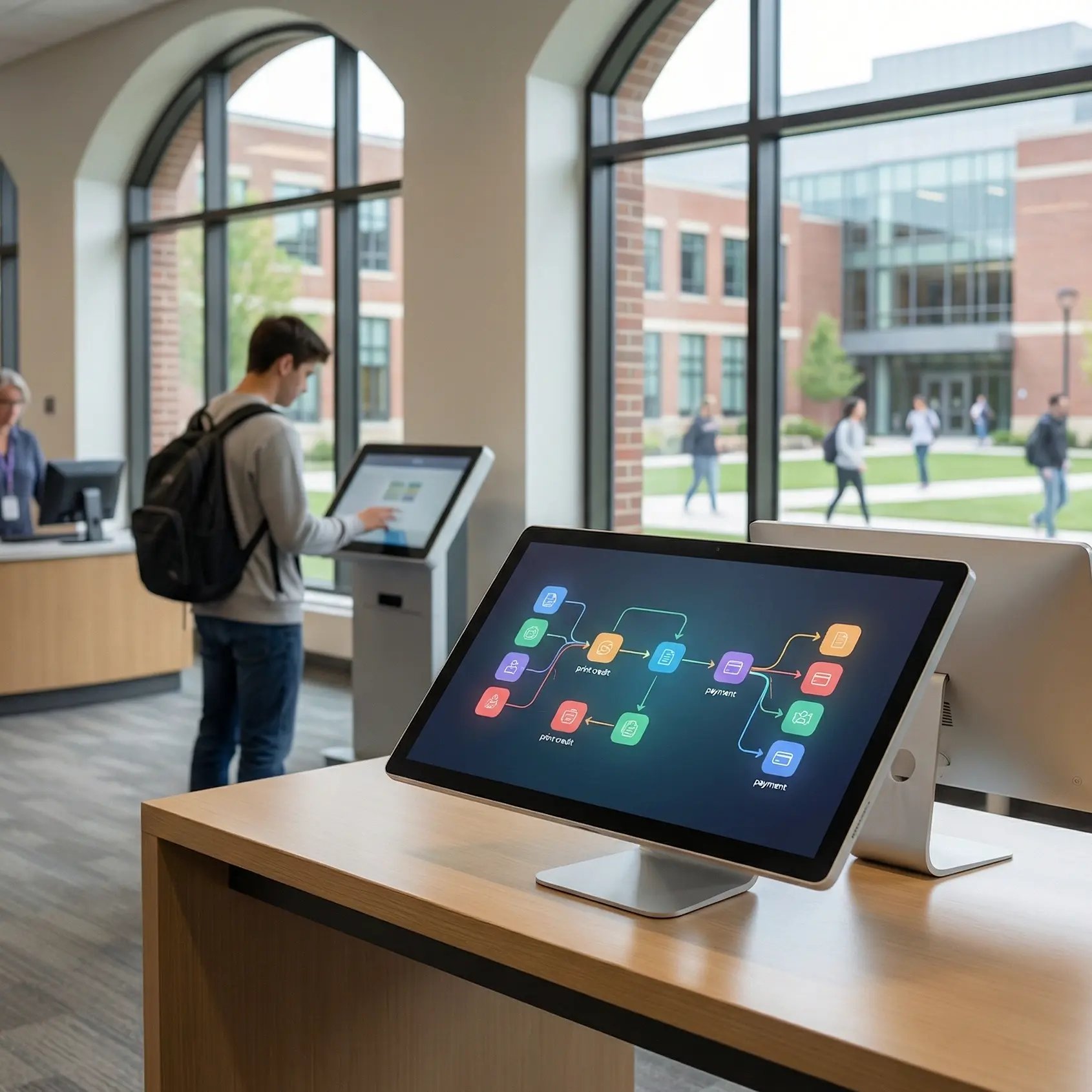
Printer assignments, user groups, print policies, default settings, and usage reporting are all handled from a single web-based admin portal. Changes apply instantly across every location and device type. No GPOs, no login scripts, no per-site configuration.

Your image ALT text

What Cloud Printing Replaces

The infrastructure that cloud printing replaces has been the standard for decades, and most IT teams know its pain points well.

Print servers are the core of traditional print infrastructure. Every office or building typically needs at least one, running Windows Server with shared printer queues, drivers, and Group Policy-based printer deployment. Print servers require licensing, patching, failover planning, and hardware refreshes every few years. When a print server goes down, every user connected to it stops printing.

Printer drivers are the most common source of print-related support tickets. Every printer model needs its own driver, and different operating systems need different versions. Driver conflicts crash the Windows Print Spooler, and every Microsoft spooler patch risks breaking deployments that were working before. Since PrintNightmare in 2021, driver installation on Windows requires admin rights by default, making deployments harder.

GPO-based printer mapping depends on Active Directory, domain-joined Windows devices, and network proximity. It doesn't work for Mac, Chromebook, iOS, or Android, and it breaks when users work remotely or move between offices. VPN tunnels are often required for remote users to reach printers, adding cost and complexity.

Cloud printing removes all three layers. There are no print servers to maintain, no drivers to install on endpoints, and no GPO policies to configure. Printers connect to the cloud through a compact hub or connector device, and users print from any device on any network.

Why Cloud Printing

Why Organizations Are Moving to Cloud Printing

Lower Infrastructure Costs

Eliminating print servers removes Windows Server licenses, CALs, hardware refresh cycles, and the IT hours spent maintaining them. The reduction is immediate and measurable, especially for organizations with multiple offices.

Fewer Support Tickets

Driver conflicts, spooler crashes, and "I can't find my printer" calls are the most common print-related tickets. Cloud printing eliminates all three by removing drivers from endpoints and assigning printers through the cloud.

Consistent Experience Across Devices and Locations

A Windows desktop in the office, a MacBook at home, and an iPad in a meeting room all print the same way. Users don't need to be on the corporate network, and IT doesn't need to maintain separate print setups per platform.

Stronger Security Posture

Removing print servers eliminates an entire class of on-premises infrastructure that requires patching and monitoring. Outbound-only connections mean no inbound firewall ports. Encrypted transmission and optional authenticated print release keep documents secure from submission to output.

ezeep Cloud Printing

How ezeep Implements
Cloud Printing

ezeep is a cloud printing platform that follows this architecture. Print jobs are rendered in the cloud using a library of over 6,000 manufacturer-specific drivers. The ezeep Hub connects printers at any location without print servers or VPNs.

Users print from Windows, macOS, ChromeOS, iOS, and Android without installing drivers. IT manages everything from a single web console with identity-based printer assignments through Microsoft Entra ID or Google Workspace.

See How ezeep Works
ezeep-campus
Related Articles

Dive Into the World of ezeep

Frequently Asked Questions

Curious about how it all works? Here's everything you wanted to know about ezeep's cloud printing solution!

What is the difference between cloud printing and cloud-managed printing?

Cloud printing processes and renders print jobs entirely in the cloud, with no print server involved at any stage. Cloud-managed printing uses a web console to manage print servers that still run on-premises or in a cloud tenant. The distinction matters because cloud-managed printing still requires server maintenance, driver management, and the hardware costs that come with it. True cloud printing eliminates all of that.

Does cloud printing work with any printer?

Most cloud printing platforms support a wide range of printer brands and models through cloud-hosted driver libraries. The printer itself doesn't need to be "cloud-ready." A small on-premises device, like a hub or connector, bridges standard network and USB printers to the cloud. Compatibility depends on the platform's driver library, which typically covers thousands of models from manufacturers like HP, Xerox, Lexmark, Epson, Konica Minolta, Kyocera, Brother, and Zebra.

Is cloud printing secure?

Cloud printing platforms encrypt print data in transit using TLS and process jobs in isolated environments. Because no printer drivers are installed on endpoints, the attack surface that vulnerabilities like PrintNightmare exploit does not exist. Many platforms also offer authenticated print release (Pull Printing), where jobs are held in the cloud until the user verifies their identity at the printer. No documents sit unattended on output trays.

Can remote and hybrid workers use cloud printing?

Yes. Because print jobs route through the cloud rather than through a local network or VPN, users can print from any location with an internet connection. A remote worker printing from home, a branch office employee, and someone in headquarters all use the same print path. No VPN tunnels or network proximity are required.

What happens to existing printers when switching to cloud printing?

Existing printers stay in place. Cloud printing replaces the server and driver infrastructure behind the printers, not the printers themselves. A hub or connector device bridges the existing hardware to the cloud. Most organizations can migrate without replacing any printer hardware.

Back to top

Want to See Cloud Printing in Practice?

ezeep is free for up to 10 users. Set it up in minutes and see how cloud printing works in your environment.

ezeep-chart (1)