Coworking Pricing Models: Desk, Office, Day Pass & Add-ons
By Ines Reinhardt on February 3, 2026
Last updated on March 31, 2026
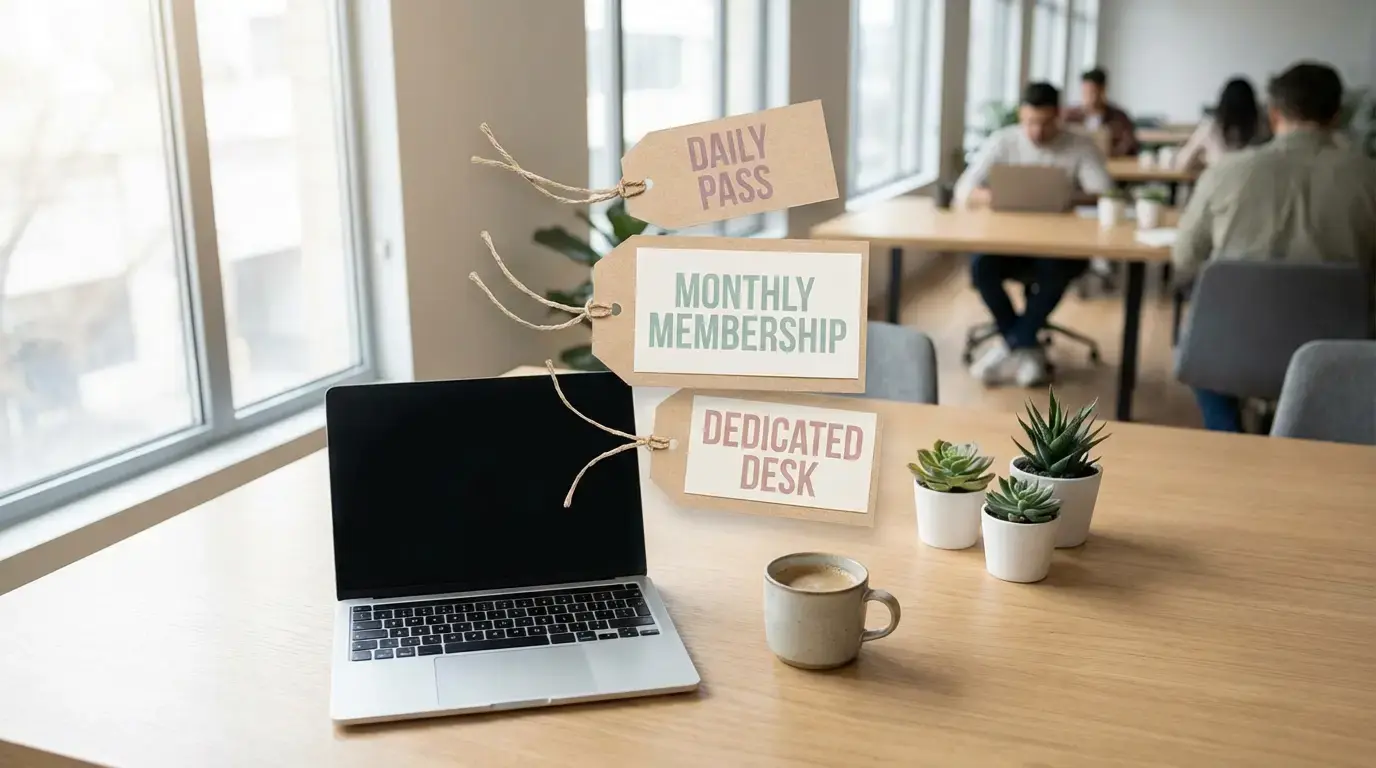
By 2026, coworking pricing has evolved significantly. Members now expect flexible, transparent, and fair plans, much like streaming subscriptions. This shift is a key opportunity for coworking spaces to stabilize occupancy, boost revenue per member, and deliver an excellent experience through smart pricing strategies.
What's Changed in the Market?
Hybrid work has created uneven demand, with peak usage from Tuesday to Thursday and quieter Mondays and Fridays. Member expectations for service have also risen, including self-service options, smooth workflows, reliable Wi-Fi, and instant-access meeting rooms. Coworking spaces that continue to set prices based on intuition risk lost revenue or increased operational costs.
Four Pricing Building Blocks for Coworking Spaces
Hot Desk Membership (Flexible, Flexible)
This model is ideal for freelancers and hybrid employees. It works best with clear rules regarding weekdays, time slots, and fair usage. When planning, focus on actual usage rather than assuming a high percentage of inactive members, as most show up 6–10 days per month.
Dedicated Desk (Reliable, High-Margin)
Dedicated desks suit members who prefer a consistent personal workspace. This offers a chance to add value through amenities like storage, monitor rental, and mail handling services.
Private Offices (Revenue Anchor for Teams)
Private offices attract teams seeking quiet, commitment, and a professional environment. These can be crucial for predictable monthly revenue. Use tiered pricing based on team size and include meeting room credits instead of flat per-office rates.
Day Pass (Occupancy Driver and New Customer Magnet)
Day passes are more than just for walk-ins; they act as a trial experience for potential long-term members. The process needs to be smooth: book, enter, work, with minimal need for support.
Add-ons: Where Upselling Gets Profitable
Coworking spaces succeed by creating value-driven packages, not just offering the lowest rates. Add-ons should enhance the member experience, not complicate it.
Successful examples include:
- Meeting room hour bundles (small/medium/large)
- Phone booth or focus time packages
- Mail address and package acceptance
- Premium coffee or guest passes
- Printing and scanning (fair use or pay-per-use)
- Extra monitor or ergonomic upgrades
Smart Calculation: A Simple Model You Can Use Today
Consider pricing using a three-point model:
- Cost base: rent, energy, staff, software, cleaning, and insurance.
- Capacity: the number of desks/offices and realistic occupancy projections (not 100%).
- Target margin: how much each unit needs to generate for continuous growth.
For example, if you have 40 desks but realistically operate at 60% occupancy, calculate with 24 "effective desks." This prevents pricing structures that only work at full capacity.
Common Mistakes (and How to Avoid Them)
- Too many plans: This can confuse instead of help. Stick to 3–5 clear options.
- Day pass with no upgrade path: Design every day pass to encourage future membership.
- Add-ons without structure: "Free printing" can get expensive. Offer fair-use policies or bundles instead.
- No pricing signal for peak days: If everyone uses the space Tuesday to Thursday, offer incentives like a "Mon/Fri bonus" or flexible usage credits to balance demand.
Conclusion: Pricing Is a Product
The winning coworking spaces in 2026 will have clear, fair, and financially sound pricing. A strong pricing strategy simplifies your offering, improves planning, and creates a positive member experience that encourages recommendations.
Frequently Asked Questions
How have coworking pricing models evolved by 2026?
Coworking pricing has shifted from simple, single plans to more flexible and transparent models. Members now expect options similar to streaming subscriptions, with clear pricing and no hidden fees, allowing for better revenue generation and occupancy rates for coworking spaces.
What impact has hybrid work had on coworking space demand?
Hybrid work has created uneven demand for coworking spaces, with peak usage from Tuesday to Thursday and quieter periods on Mondays and Fridays. This fluctuation necessitates dynamic pricing strategies to optimize space utilization and profitability.
What are the key components of effective coworking pricing in 2026?
Effective coworking pricing in 2026 relies on four main building blocks: hot desk memberships, dedicated desk options, private office rentals, and day passes. These options cater to diverse member needs and usage patterns.
Who benefits most from a hot desk membership?
Hot desk memberships are ideal for freelancers and hybrid employees seeking flexibility. These plans typically include specific rules regarding weekdays, time slots, and fair usage to ensure equitable access for all members.
- February 2026 (1)
- November 2025 (1)
- October 2025 (1)
- September 2025 (1)
- August 2025 (4)
- July 2025 (1)
- June 2025 (3)
- May 2025 (1)
- April 2025 (5)
- March 2025 (6)
- February 2025 (4)
- January 2025 (3)
- December 2024 (3)
- November 2024 (4)
- October 2024 (5)
- September 2024 (2)
- August 2024 (2)
- July 2024 (3)
- May 2024 (4)
- March 2024 (1)
- February 2024 (3)
- January 2024 (1)
- December 2023 (1)
- November 2023 (1)
- October 2023 (3)
- September 2023 (1)
- August 2023 (1)
- July 2023 (1)
- June 2023 (2)
- May 2023 (1)
- April 2023 (3)
- March 2023 (3)
- February 2023 (4)
- January 2023 (2)
- December 2022 (3)
- November 2022 (2)
- October 2022 (5)
- September 2022 (2)
- July 2022 (2)
- June 2022 (2)
- April 2022 (2)
- March 2022 (2)
- February 2022 (2)
- January 2022 (1)
- July 2021 (5)
- June 2021 (4)
- May 2021 (3)
- March 2021 (3)
- November 2020 (1)
- October 2020 (1)
- April 2020 (4)
- March 2020 (3)
- February 2020 (3)
- January 2020 (1)
Subscribe by email
You May Also Like
These Related Stories

Why Member Satisfaction is Crucial for Coworking Spaces
Rooftop Office Uses ezeep, Lexmark, and Nexudus for Printing