By Robert Noonan on October 7, 2020
Last updated on March 31, 2026

Hybrid work models are redefining how we approach our daily tasks, blending home and office environments through cloud technology. The core insight is that employees want flexibility, and the cloud provides the tools to make it happen, allowing for smooth transitions between work locations.
Early in 2020, many of us quickly adapted to working from home. This shift, despite its challenges, highlighted the psychological and productivity benefits of disrupting the traditional 5-day office routine.

The Hybrid Workplace: The New Default Model?
A recent internal company survey revealed that nearly 75% of employees desired a mix of home and office work for the future. This aligns with broader research, indicating a strong preference among workers for hybrid arrangements.
Our results (for a tech company with highly-skilled employees) are broadly in line with research such as that carried out by Stanford University’s Institute for Economic Policy Research. Their “How Working from Home Works Out” shows that 20% of employees never want home office. Another 25% want to do it full time. The remaining 55% majority all want some mix of office and home time (see figure 5 in their report). Understanding employees’ wishes is one thing, but designing a hybrid workplace that is flexible enough to manage changes over the next 10 to 15 years is another.
There is no single definition of hybrid work yet. However, the goal should be to enable employees to complete tasks efficiently, regardless of location. A simple internet connection and a laptop are often the key enablers. If the COVID-19 pandemic had occurred a decade earlier, the economic impact would have been far greater. The ability to work from home has been crucial in maintaining economic activity and addressing public health challenges.
How Cloud Tools Support Hybrid Work
The cloud is central to creating a flexible hybrid workplace, offering security features and scalability to meet evolving demands. With nearly all devices connected to the internet, the cloud provides a clear path for enabling hybrid work.
While some functions cannot instantly transfer to the cloud, like printing, innovative third-party solutions are bridging the gap. For printing, ezeep moves the entire process to the cloud. This frees organizations from managing drivers, operating systems, and specific end devices. Users print just as they expect to. With 77% of employees having a printer at home, ensuring printing for remote workers is a critical part of a hybrid work strategy.
Printers at Home With ezeep
ezeep offers a solution for home workers: the ezeep Hub. It can be sent directly to employees working from home. As a plug-and-play device, employees simply plug it in. The ezeep Hub automatically registers itself on the network. An IT administrator enters the Mac address, found on the device's back, into the central cloud management console. From there, the ezeep Hub and its connected printer can be fully managed, centrally and remotely. This also supports strengthened security policies. Access to local interfaces can be blocked, while printing remains possible.
In the broader context of the hybrid workplace, cloud printing exemplifies how to reduce cost and complexity while improving efficiency. Eliminating local print servers and moving print management to the cloud shifts capital expenses to operating costs. When combined with flexible and flexible subscriptions, this leads to lower and more predictable costs. This also reduces the burden on IT departments. For example, Quocirca found in a snapshot of US and UK IT decision-makers that 49% had already implemented cloud print management, with another 36% planning to do so. This proof point highlights the industry's move towards cloud-based solutions, built on ThinPrint technology trusted by Fortune 500 organizations.
The Future Impact of Hybrid Work
COVID-19 served as a critical wake-up call for IT to ensure reliable systems for such events. The long-term effects on how we work are evident. Most companies will likely adopt a mix of home and remote work. This allows for focused work at home and collaborative office days. Benefits include reduced stress for commuters and a positive environmental impact.
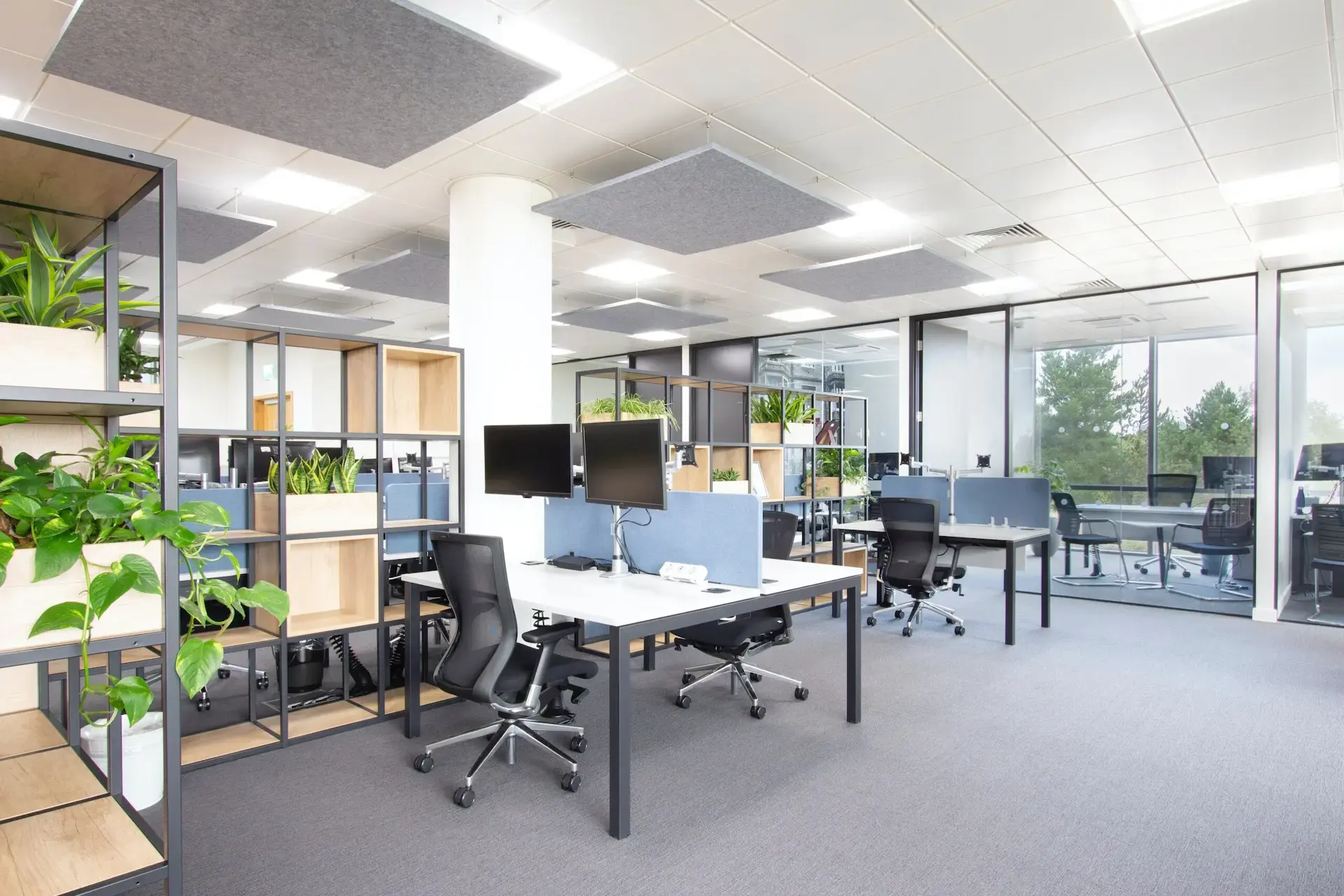
Many companies will also look to adjust their office space, potentially reducing open-plan areas while retaining meeting rooms and collaborative spaces. This ensures teams can easily and productively work together with sufficient space. For online collaboration, impressive solutions exist, such as Teamplace for teamwork.
Moving IT systems to the cloud will also bring long-term improvements in scalability and security for IT professionals. End-users will also benefit from improvements in usability. New features and tools will boost employee productivity in the coming years. This will support economic recovery and help future-proof our world against similar events.

Hybrid Work, New Work, and the Future of Work

Windows 365 and Cloud PC Explained