By silkek on May 8, 2024
Last updated on March 31, 2026
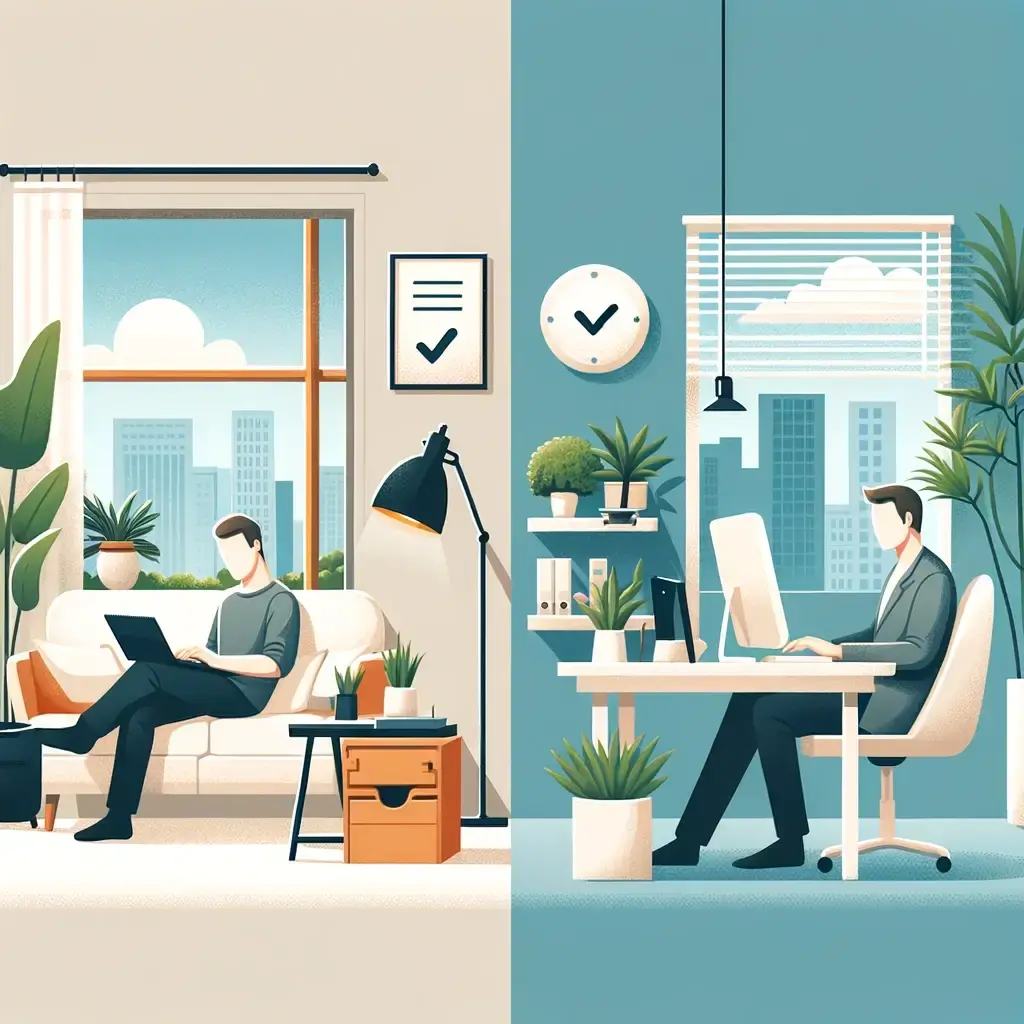
A recent survey reveals that workplace flexibility is here to stay. Employees overwhelmingly prefer hybrid models, with many opting for significant home office time or no office presence at all after the COVID crisis. This permanent shift means businesses must adapt their policies to attract and retain talent.
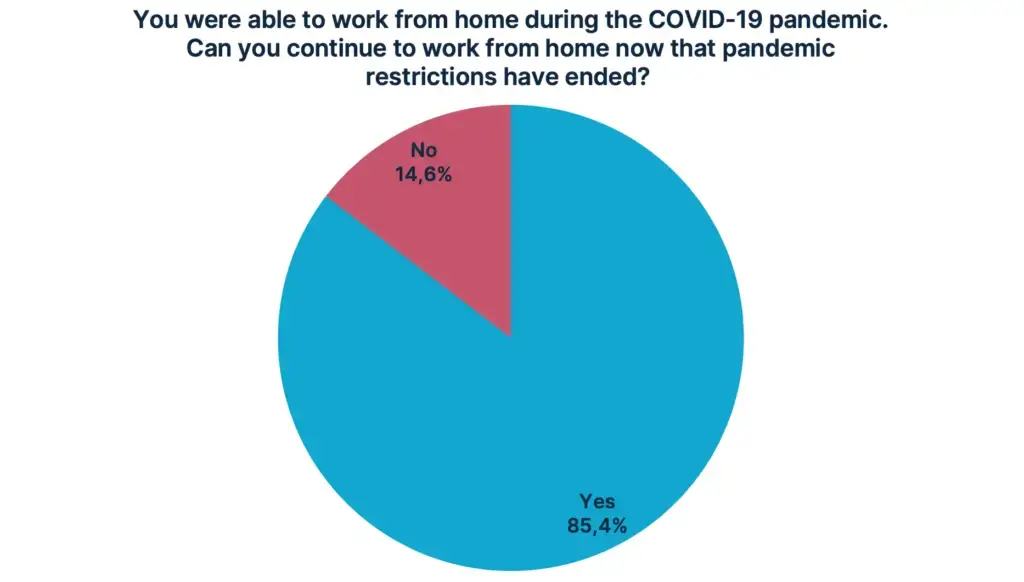
What do employees want regarding hybrid work?
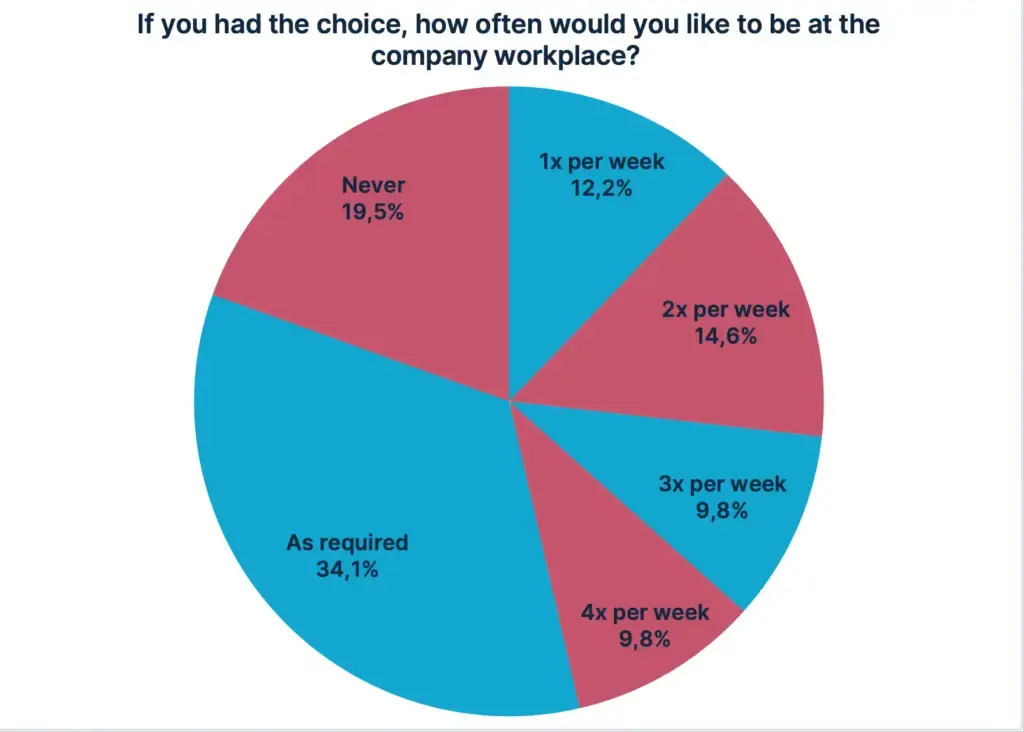
Employees desire significant flexibility, with 85% having the option to work from home post-COVID. Nearly 20% prefer not to return to the office at all. The remaining majority prefer working in the office 1-4 times per week, with a notable portion (34.1%) preferring office presence only as needed, suggesting strong company identification.
What do employers want from employees regarding office presence?
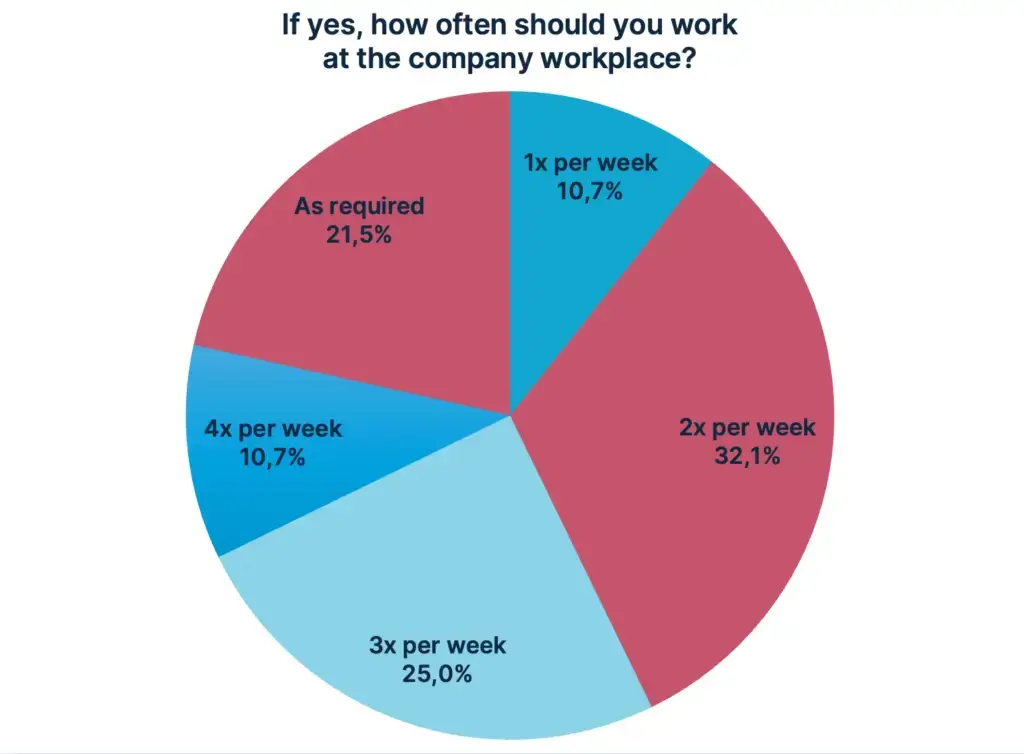
Employers generally seek a higher frequency of office presence than employees desire. Specifically, 32.1% of employers want staff in the office twice a week, 25% want three times a week, and 10.7% want four times a week. Only 10.7% of employers are content with once-a-week presence, indicating a disconnect between employer and employee expectations for returning to the office.
Are companies capitalizing on cost savings from hybrid work?
While many employees embrace hybrid work, companies may not be fully realizing potential cost savings. A high percentage of employees (65.9%) still have dedicated desks, even if they are rarely in the office. This suggests companies might not yet be fully comfortable with or have adopted concepts like hot desking, which could reduce significant budget items like rent and office equipment, estimated at 500 euros per month per employee.
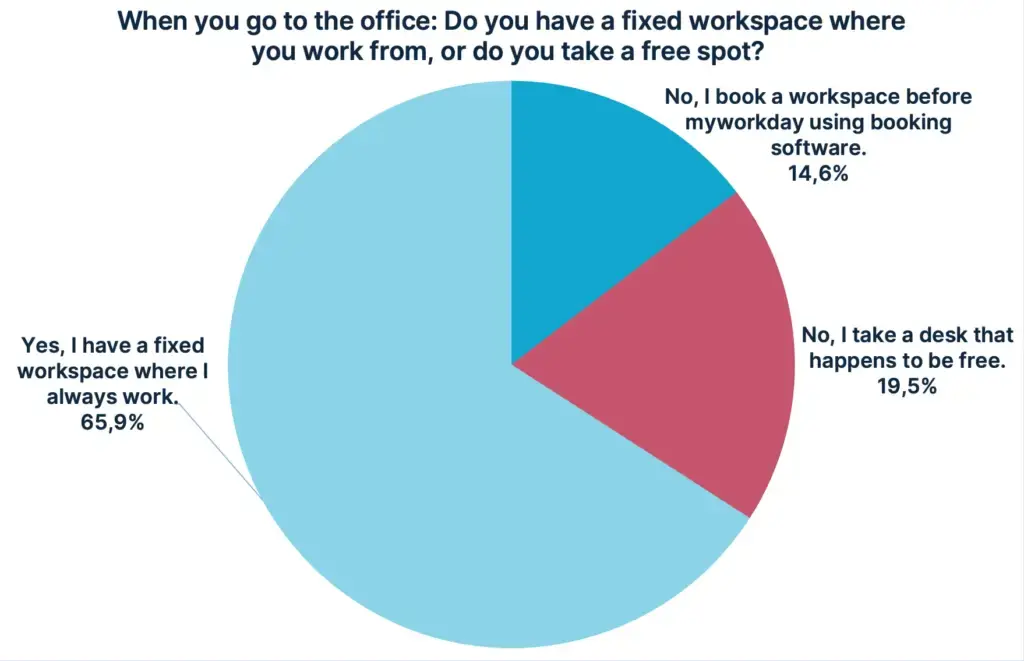
Among employees without a fixed desk, 14.6% book their desks via a reservation system, aligning with the growing trend of hot desking in modern work environments. However, 19.5% still rely on finding a free desk, indicating room for improvement in workspace management.
Even with high home office acceptance, a clear need remains for physical office spaces as social and collaborative hubs. This indicates that flexible work became a permanent change in work structure, not just a temporary adjustment.
Conclusion
The survey results highlight a significant transformation in the work environment. Companies supporting these changes enhance employee satisfaction, boost productivity, and improve their ability to attract and retain talent. ezeep supports printing infrastructure across all working models.
Ready to simplify printing for your hybrid workforce? Try ezeep free and make printing the boring part of your day.
Azure Virtual Desktop: New Name, New Features

What is Mobile Printing?