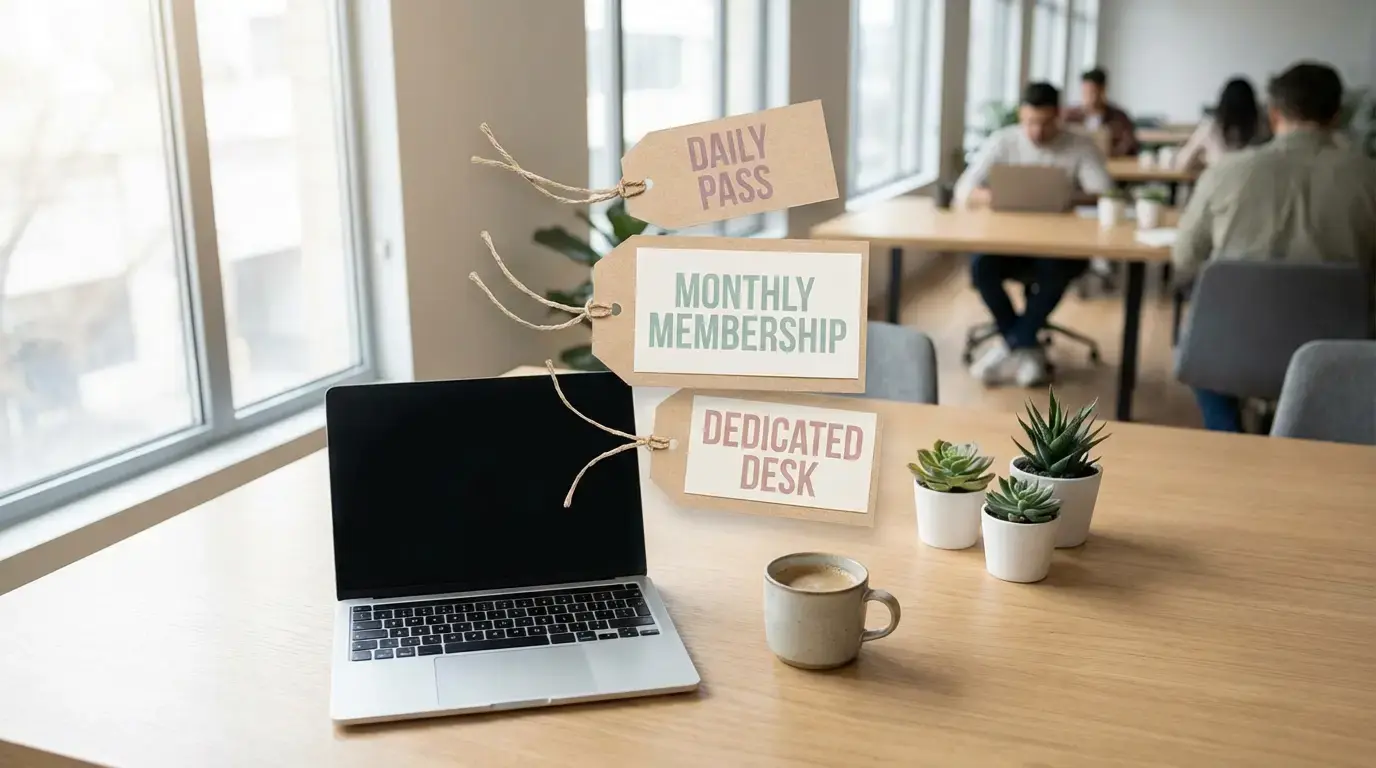
Coworking has changed, and so has the definition of "successful." Today, it's all about predictable occupancy. Hybrid work creates peak days (usually Tuesday-Thursday) and quieter days. Coworking spaces can thrive not with cheaper prices, but with smarter offerings, better distribution, and a member experience that feels premium yet intuitive.
This playbook gives you actionable strategies to increase bookings, tours, and conversions in your coworking space, helping you achieve consistent utilization without relying on price reductions.
Market Shift: Why Occupancy in 2026 Is Both Harder and More Controllable
Demand hasn’t vanished; it's just distributed unevenly. Members seek flexibility, while teams need reliability. At the same time, expectations for user experience are rising. "Book, walk in, get to work" needs to be easy. Every point of friction reduces occupancy, while every simplification drives growth.
10 Levers to Drive Utilization Without a Price War
1) Segment Your Demand: Who's Booking What. and Why?
To optimize your offerings and channels, break down your audience into three key groups:
- Solo users (freelancers/hybrid workers): value flexibility, price-performance, and community.
- Teams (2–15 people): need quiet spaces, meeting rooms, and predictable availability.
- Corporate guests: expect professionalism, compliance, and easy operations.
2) Create Peak vs. Off-Peak Offers (Without Going Cheap)
Focus on offering value and incentives instead of discounts.
- “Mon/Fri Focus Pass” (includes phone booth access)
- “Quiet Hours” booking slots
- “Team Tuesday” bundles (office + meeting room)
This approach moves demand without diluting your brand value.
3) Use Day Passes as a Conversion Engine
A day pass serves as a trial funnel for your space. Build a clear upgrade path:
- Credit the day pass toward a membership if they sign up within 7 days.
- Offer a “3-Day Trial Pack” instead of single days to encourage higher return rates.
- Trigger automated follow-ups (email/SMS) the next day.
4) From Tour to Contract: Make Your Funnel Trackable
Many spaces lose occupancy not in marketing, but in the follow-up process. Standardize your approach:
- Create a tour checklist covering needs, desired start date, budget, and decision process.
- Send an offer within 2 hours of the tour.
- Follow up after 2 and 5 days with short, friendly, and direct messages.
5) Google Business Profile: Your Strongest Local Lever
Coworking spaces thrive on local visibility. Keep your profile updated and active:
- Add new photos weekly (spaces, events, people).
- Answer Q&As promptly.
- Post 1–2 times per week (e.g., “Meeting room available Friday”).
- Actively request reviews by sending a direct link.
6) “Corporate Lite” Programs for Teams Without Long-Term Contracts
Companies in 2026 want flexibility. Offer a package that’s easy for them to purchase:
- “10 Team Days/Month” + meeting room quota.
- Centralized billing and easy booking.
- Clear usage terms to avoid becoming a helpdesk.
7) Meeting Rooms as a Utilization Stabilizer
Meeting rooms frequently fill during off-peak days. Strategies include:
- Offer packages (e.g., 5/10 hours) instead of just hourly rates.
- Upsell office + meeting room bundles.
- Use a no-show policy combined with reminders (24h/2h) for more reliable usage.
8) Cut the Friction: Self-Service Over Support Tickets
Every "How do I get in?" message consumes time and energy. Build these three self-service essentials:
- A clear, simple booking page (1–2 clicks maximum).
- Access instructions and rules readable in under 1 minute.
- A welcome email with "Top 5 Answers" (Wi-Fi, phone booths, calls, guests, printing).
9) Partnerships That Drive Steady Demand
Coworking benefits from a few strong referral partners:
- Relocation agencies.
- Boutique hotels.
- Local HR/recruiters.
- Accelerators/startup programs.
- Business communities.
Keep it straightforward: offer a link, a code, a referral fee, or simply mutual visibility.
10) KPIs You’ll Actually Use (Not Just Collect)
If you track only three metrics, choose these:
- Occupancy by weekday (heatmap).
- Tour-to-member conversion rate.
- Day pass → trial pack → membership conversion.
These numbers will reveal where you need to focus: marketing, offers, or operations.
Practical Implementation: 14-Day Sprint
Week 1
- Refine your peak/off-peak offerings.
- Define your day pass upgrade path.
- Set up your tour follow-up system (2 hours / 2 days / 5 days).
Week 2
- Maintain your Google Business Profile and activate the review link.
- Create meeting room packages and set up no-show reminders.
- Write your “Top 5 Answers” welcome email.
Conclusion: Utilization Is Not Coincidence. It’s a System
When you approach occupancy as a system built on smart offers, effective distribution, and low-friction processes, you avoid competing on price. Coworking spaces are uniquely positioned to grow through clarity, quality, and experiences that feel intuitive for members.